
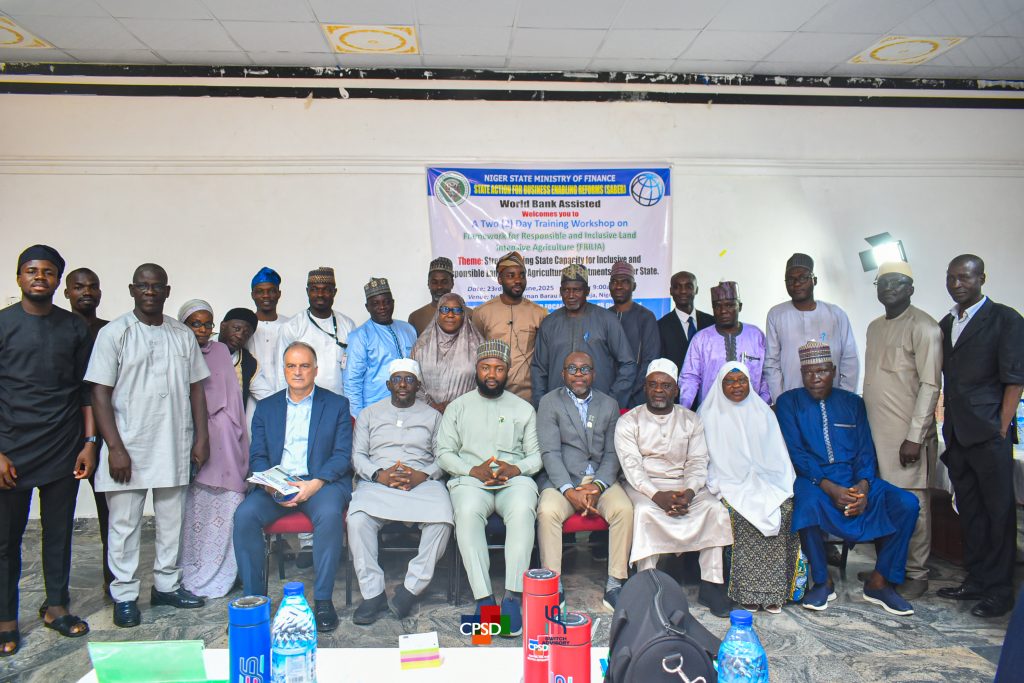

In the quiet town of Suleja, Niger State, history took a progressive turn on June 24th and 25th, 2025. Inside the conference hall of Lace Restaurant and Suites, an ambitious gathering took place—one that sought to shape the future of agricultural investments in the state. Twenty-eight stakeholders, including officials from key ministries and agencies, came together to chart a new course for land governance under the Framework for Responsible and Inclusive Land-Intensive Agriculture, better known as FRILIA.
The two-day workshop, facilitated by Switch Advisory’s Centre for Public Sector Development, wasn’t just another policy event. It was a hands-on learning experience aimed at ensuring that land-based agricultural investments in Niger State no longer stir conflict or disenfranchise communities, but instead promote inclusion, transparency, and sustainability.
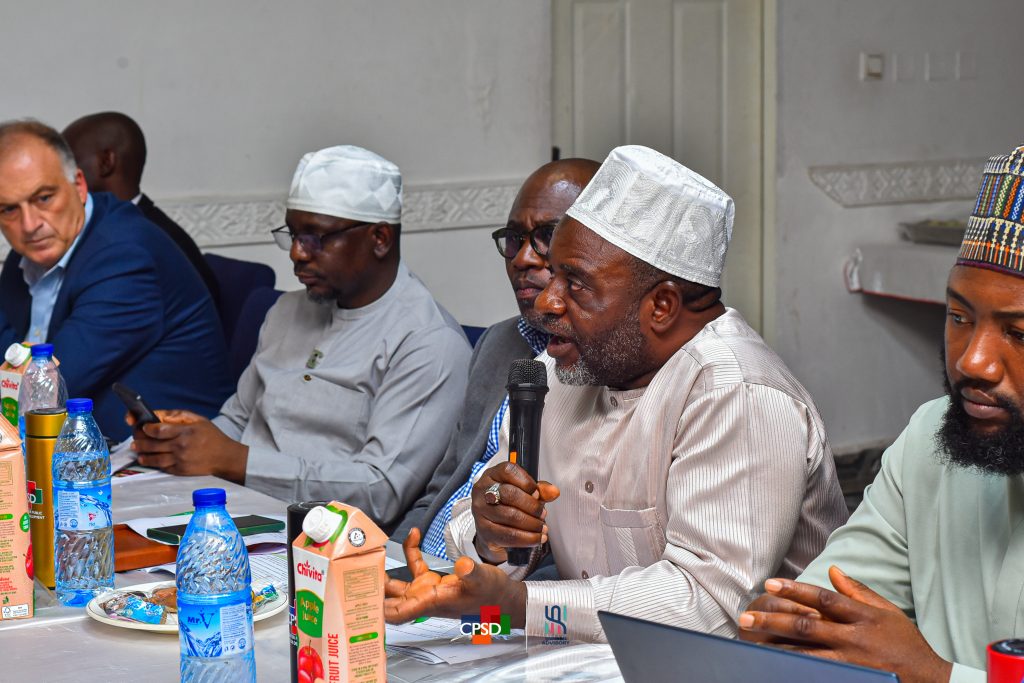
For a state rich in arable land but burdened by unresolved land disputes—like the one that derailed Dangote Sugar’s billion-naira refinery project—the training couldn’t have come at a better time.
Why FRILIA Matters
FRILIA, a framework pioneered in Kaduna and Ogun States with World Bank backing, offers practical guidance on managing land investments without sidelining communities or endangering the environment. It provides tools for screening investors, engaging stakeholders, resolving grievances, and monitoring long-term outcomes—all while respecting local customs and existing land rights.
This Niger State edition introduced participants to FRILIA’s four foundational pillars:
- Transparency and Development-Oriented Investments
- Recognition and Protection of Land Rights
- Responsible Land Acquisition and Resettlement
- Environmental and Social Sustainability
From the first session, participants openly shared past struggles, such as inter-ethnic land conflicts, overlapping authority on forest reserves, and the lack of coordination among agencies. It was clear: the old way of doing things was no longer enough.
Learning with a Purpose
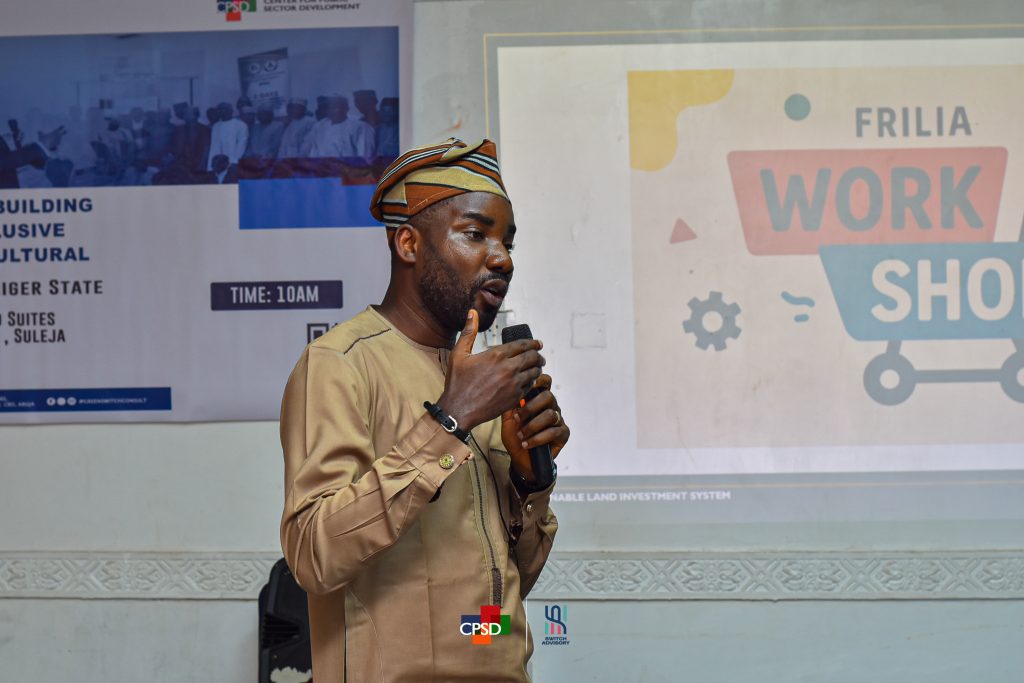
Each module of the training peeled back layers of complexity, offering practical solutions. From reviewing Nigeria’s Land Use Act of 1978 to exploring tools for grievance redress and community needs assessment, facilitators like Folahan Johnson and Michael Daramola made the learning process dynamic and relevant.
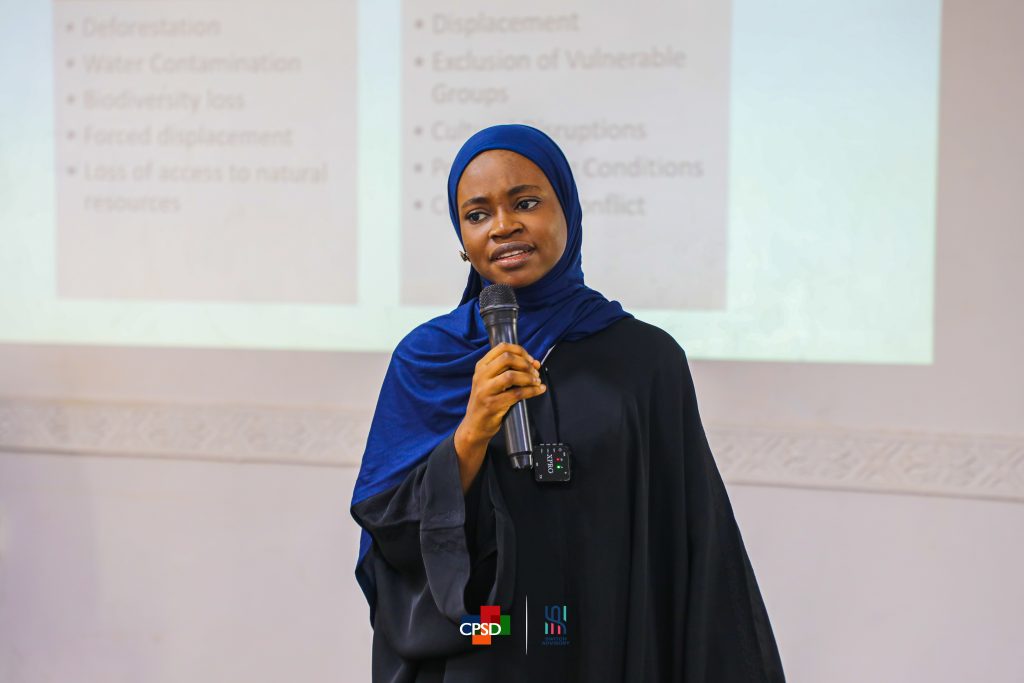
Sadiya Mukhtar’s session on environmental and social safeguards struck a particular chord. Using the recent Mokwa flood as a case study, it reinforced the importance of risk assessment in land-related decisions. Another module emphasised gender inclusion, reminding participants that responsible governance must protect the most vulnerable, especially women and Indigenous groups.
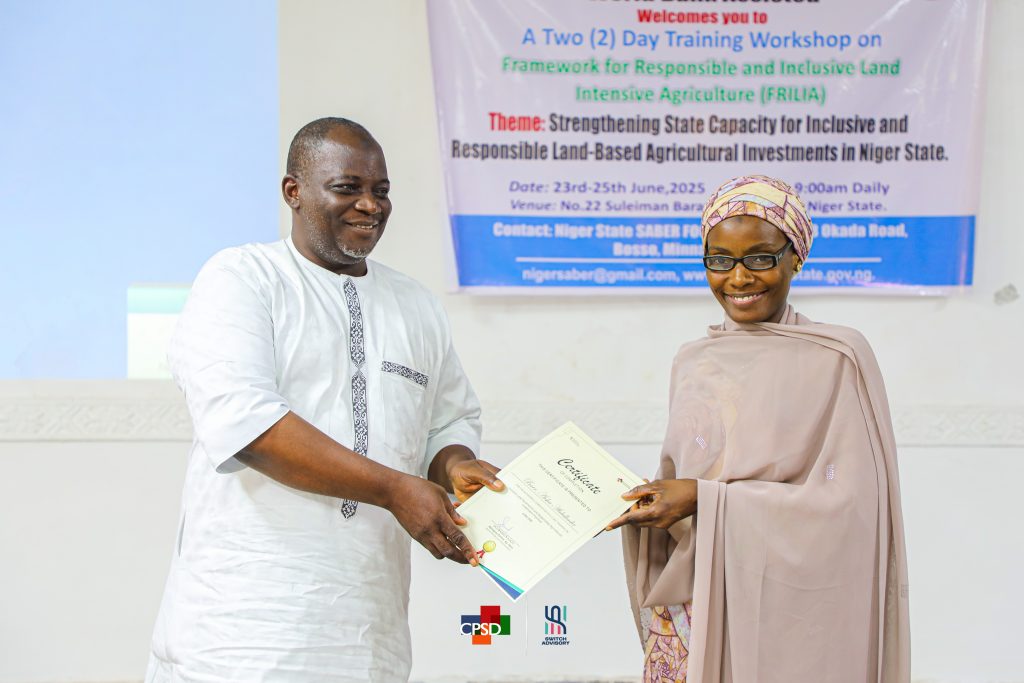
By the end of Day 2, participants had not only mastered FRILIA’s toolkits but also forged new connections across ministries. They left with certificates in hand, but more importantly, with a shared commitment to act.
What the Participants Had to Say
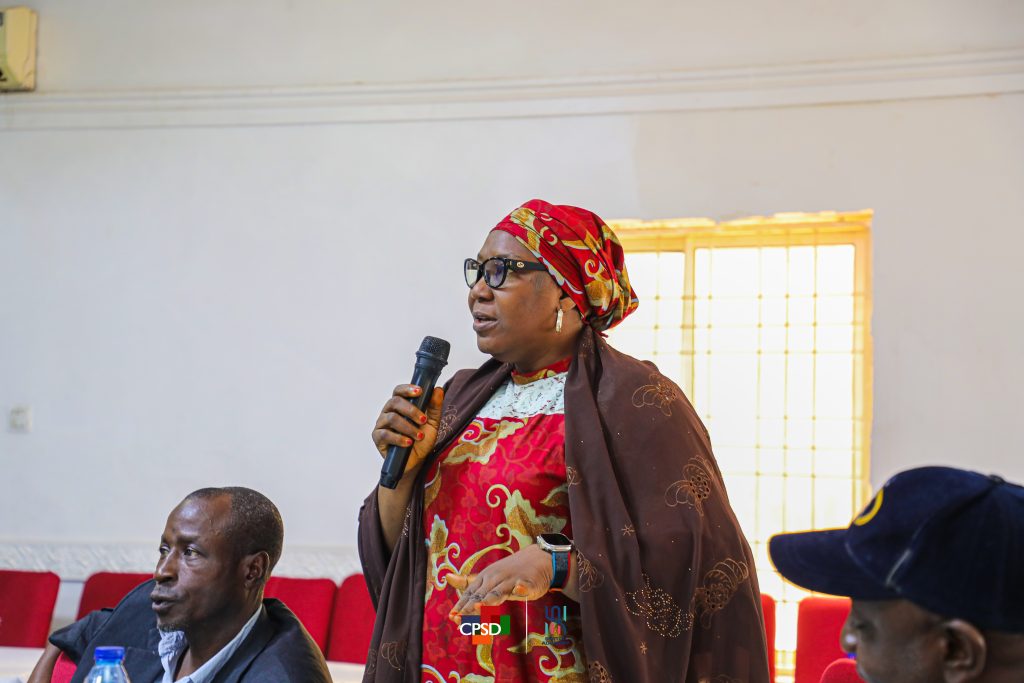
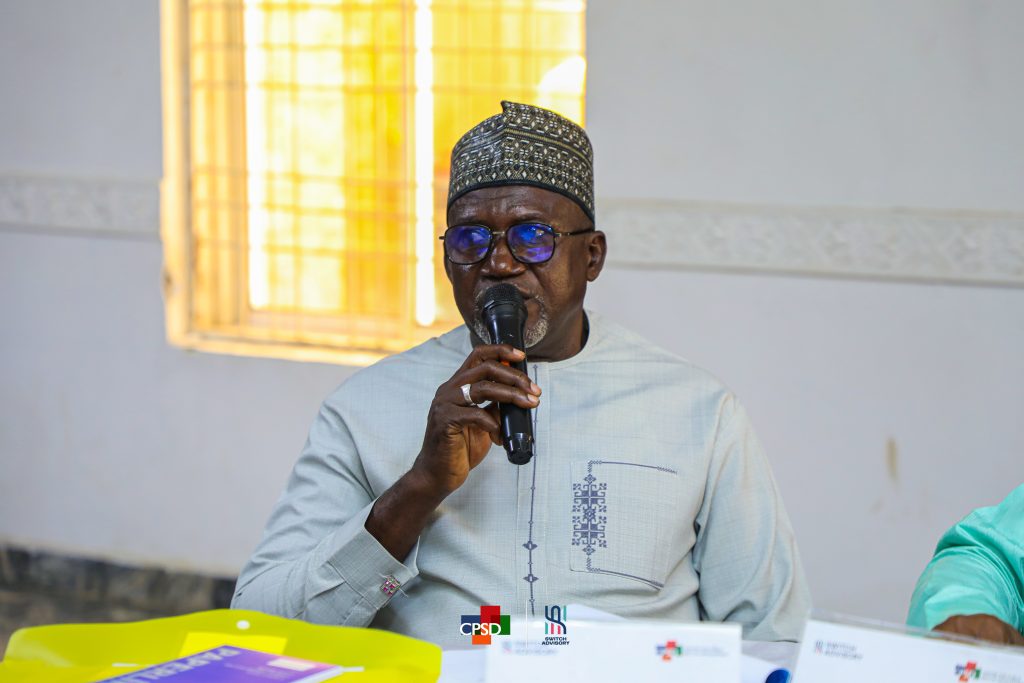
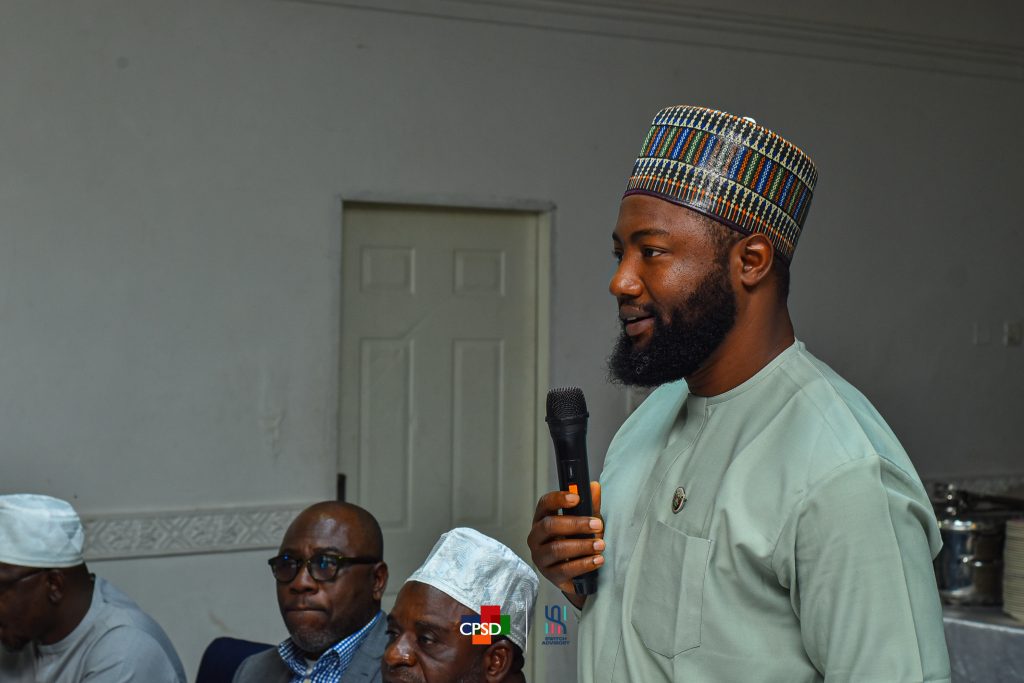
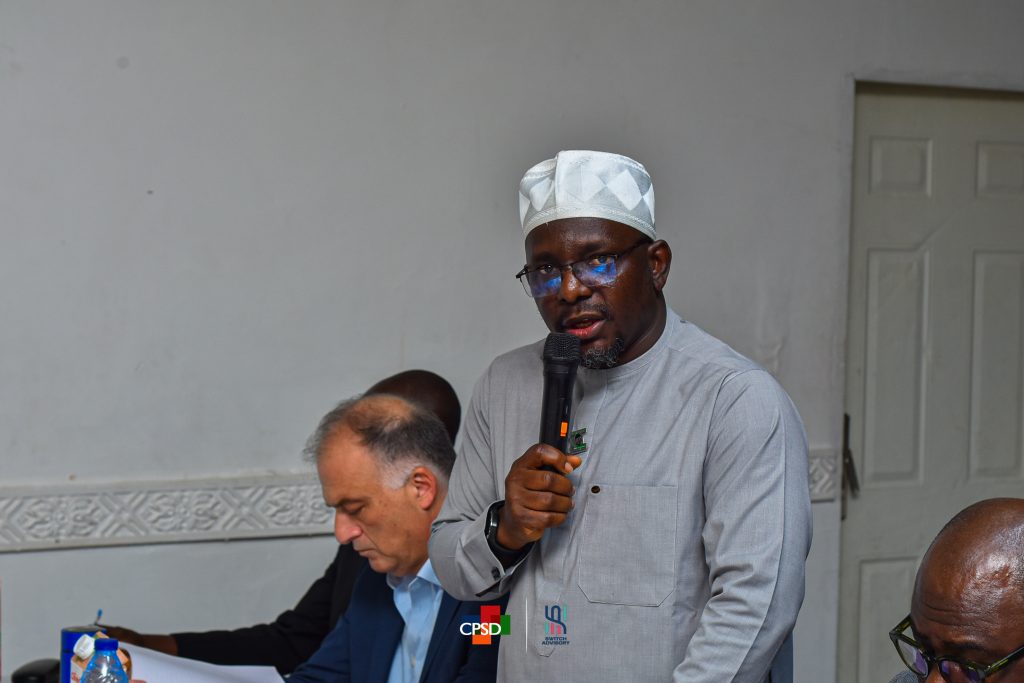
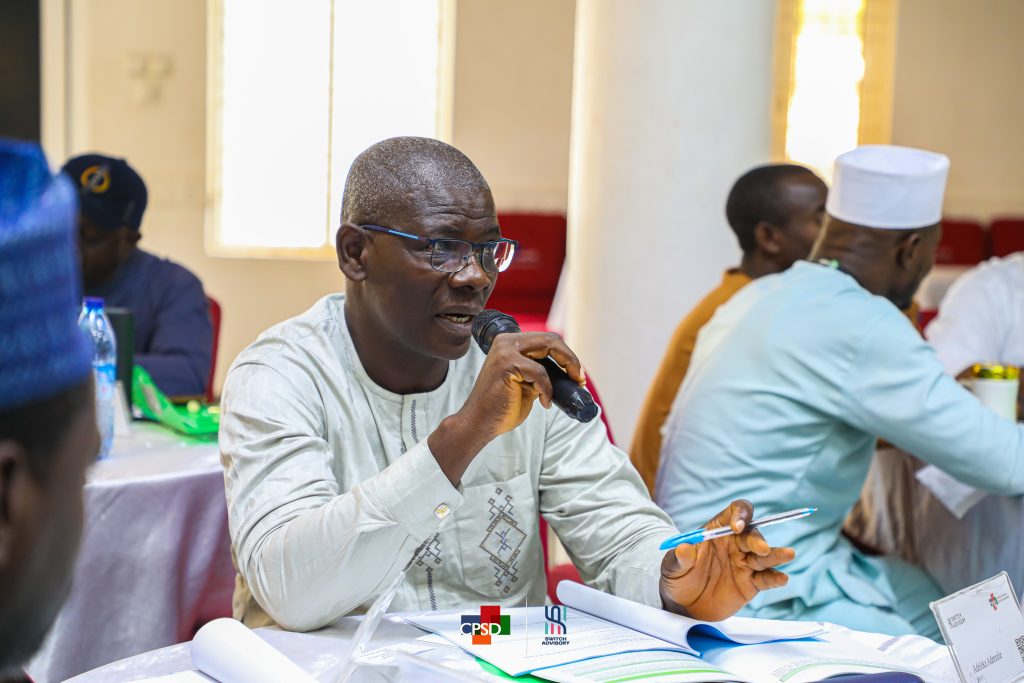
Feedback from the workshop was overwhelmingly positive.
- 90% rated the facilitators as “very effective”
- 100% found the content “very clear and relevant”
- Top-rated sessions included FRILIA toolkits, grievance mechanisms, and environmental safeguards.
Yet, they also voiced a desire for more—more time, broader inclusion of traditional and community voices, and field visits to real-life project sites.
Looking Ahead: Turning Plans into Progress
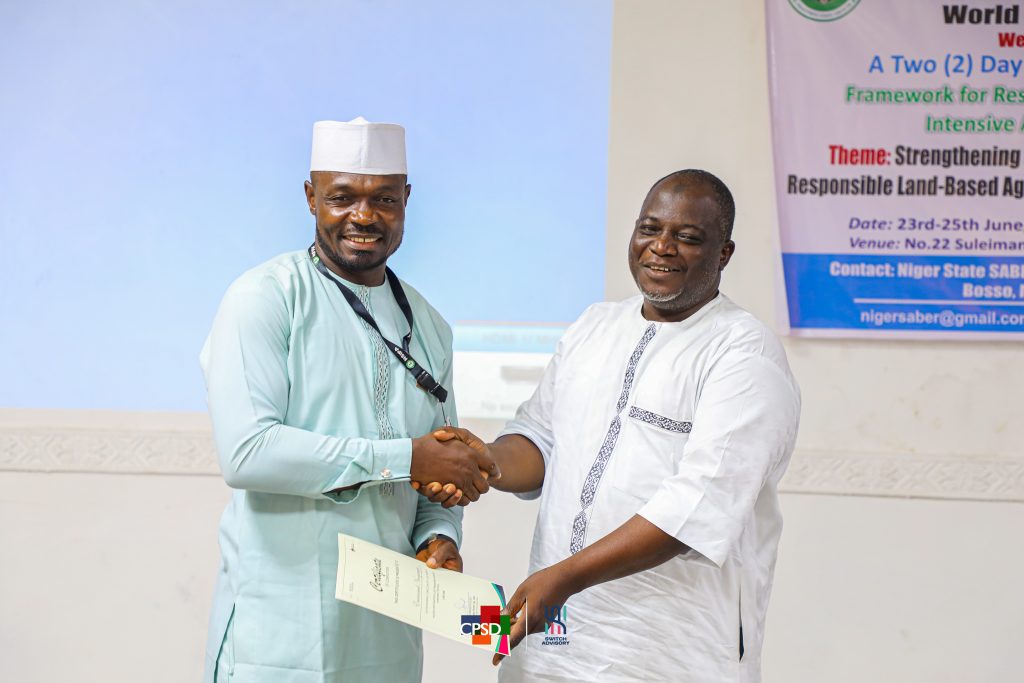
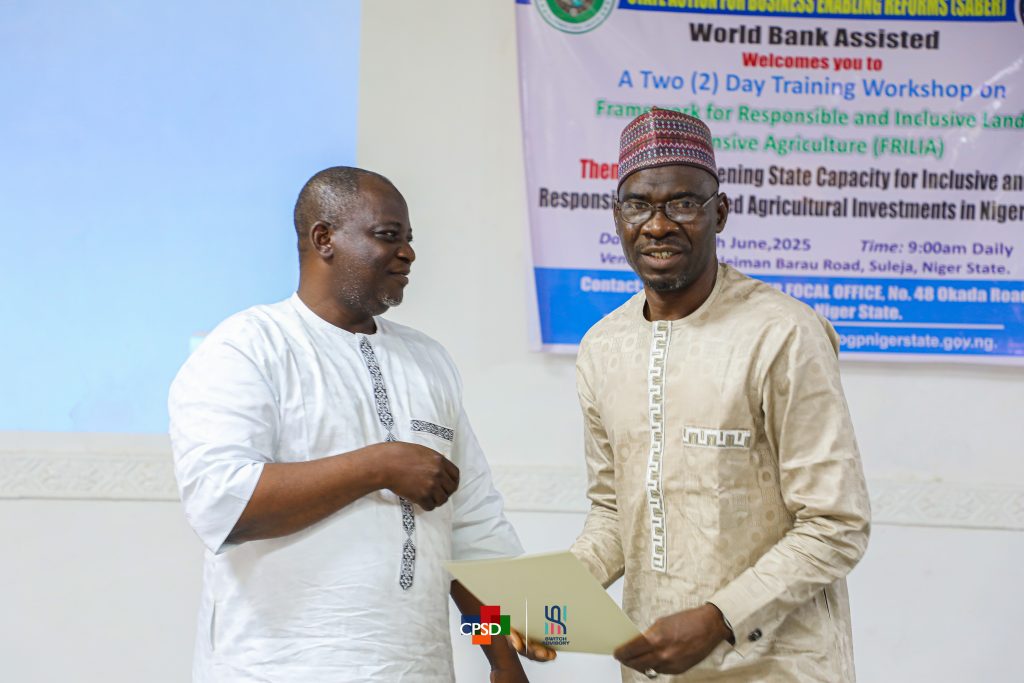
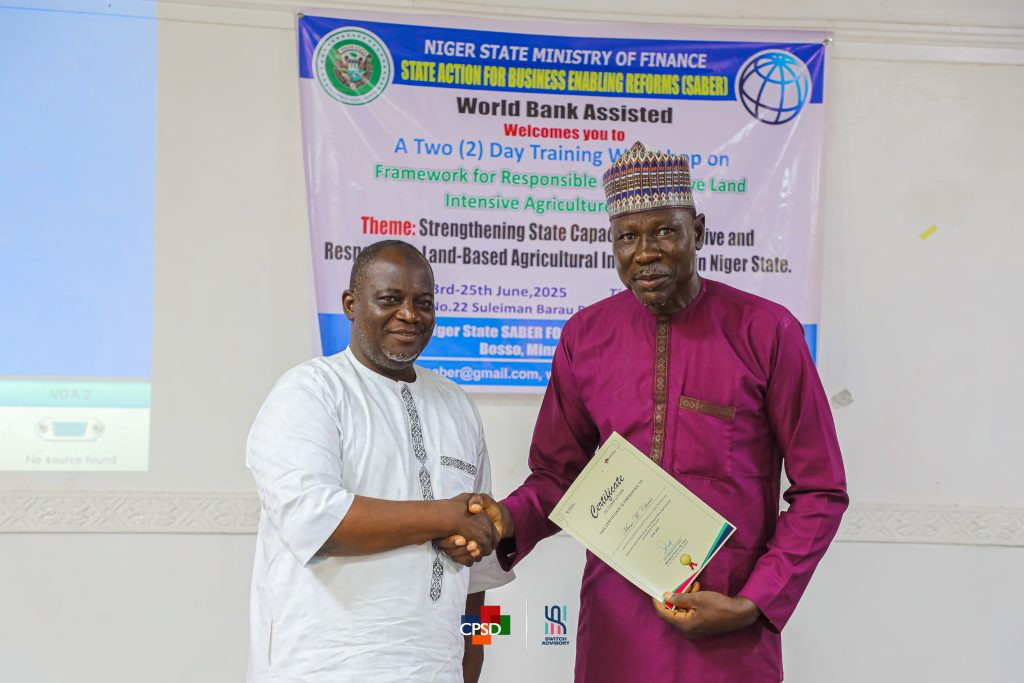
The road forward has already been mapped. Strategic recommendations include:
- Setting up a FRILIA Steering Committee within the next 3 months
- Piloting the framework in select land investment projects
- Conducting community sensitisation and step-down training for local leaders
- Developing a robust monitoring and evaluation system
What started as a workshop has now sparked a movement. One where Niger State has the chance to lead by example—not just in cultivating the land, but in cultivating trust, equity, and resilience.
Prepared by: Sadiya Mukhtar, Communications Associate